
What can ash do in an epic fantasy story besides make a place look ruined? It can change how people find water, what they value and which account of the past they believe. DRAKHTHAR’s Ash-Ra offers a concrete way to see those choices at work.
Short answer: a convincing ash-covered world has consequences for the people still living in it. In Ash-Ra’s official atlas entry, the remains of a destroyed region shape its settlements, trade, travel and search for answers. The ash is part of the story’s present, not just evidence of an earlier disaster.
The announcement of Fernando J. Múñez’s Héroes de ceniza makes the word newly prominent for fantasy readers. The publisher’s book page identifies the author, presents the premise and lists publication for 28 October 2026. Its title alone does not tell us what ash means inside that novel. It does, however, invite a useful reading question: when a fantasy world has suffered a catastrophe, how does the story show its effects after the flames are gone?
What remains after a fantasy landscape burns?
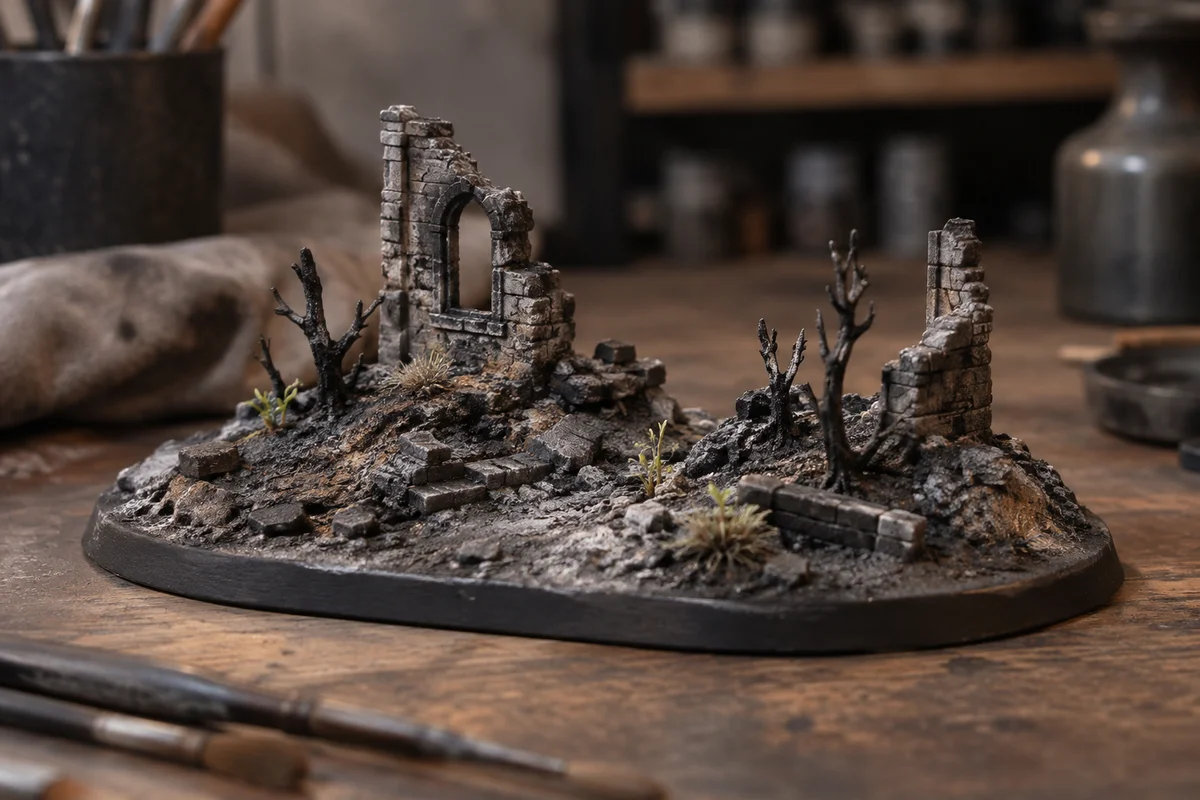
A ruined city can provide a striking first image. Ash-Ra asks the reader to look past that image. Its atlas entry describes a formerly prosperous region left under ash after an event called the Fire. The remains of its earlier civilisation lie below the surface, and people continue to investigate them.
That arrangement creates two kinds of place at once. There is the region people must cross and inhabit now. Beneath it is a place they can only recover in fragments. A reader can follow the practical problem of living there while also wondering whether the surviving records give a complete account of what happened. The landscape carries both questions without needing to answer them immediately.
How does a disaster alter ordinary decisions?
The most revealing details of Ash-Ra concern daily life. The official account describes a permanent camp built for people who may need to move, an oasis whose water is rationed, supply caravans and relics recovered from beneath the ash. It also describes a route that ash storms can erase.
| Part of life in Ash-Ra | Detail in the official atlas | Question it raises | |---|---|---| | Shelter | Movable structures at Camp Zarek | How do people settle where they may have to leave? | | Water | Rationing at the Grey Oasis | Who decides how a scarce resource is shared? | | Trade | Supplies arrive from outside; relics leave | What is the old world worth to the new one? | | Travel | Storms erase signs of the route | Who can guide a traveller safely? |

These are observations from DRAKHTHAR’s own regional catalogue, followed by questions for readers; they are not rules every fantasy world must follow. Their value is that destruction changes more than the scenery. It affects dependence, trust and the choices available to a character.
Who gets to explain what happened?
Ash-Ra’s history gives that question a personal focus. The official entry connects the Fire to Sulthar, the region’s dragon, and describes Zarek’s continuing search for an explanation. It presents a devastating choice, but the people living among its consequences still have to decide what to make of it.
That is a useful distinction when reading epic fantasy. Knowing that a catastrophe occurred is different from understanding its cause, judging a decision made during it or living with the result. An atlas can set out the known history; a character’s actions show why that history remains unsettled.
If this kind of world interests you, begin with Ash-Ra. Read its history, then its sections on settlements and trade, and ask which detail most changes your view of the Fire. From there, the DRAKHTHAR home page offers a route into the wider setting and its novel. When you encounter another fantasy world marked by ash, look for what its inhabitants must do differently the next morning.