 DRAKHTHAR
DRAKHTHAR
DRAKHTHAR
The Kingdom Beneath the Mountain
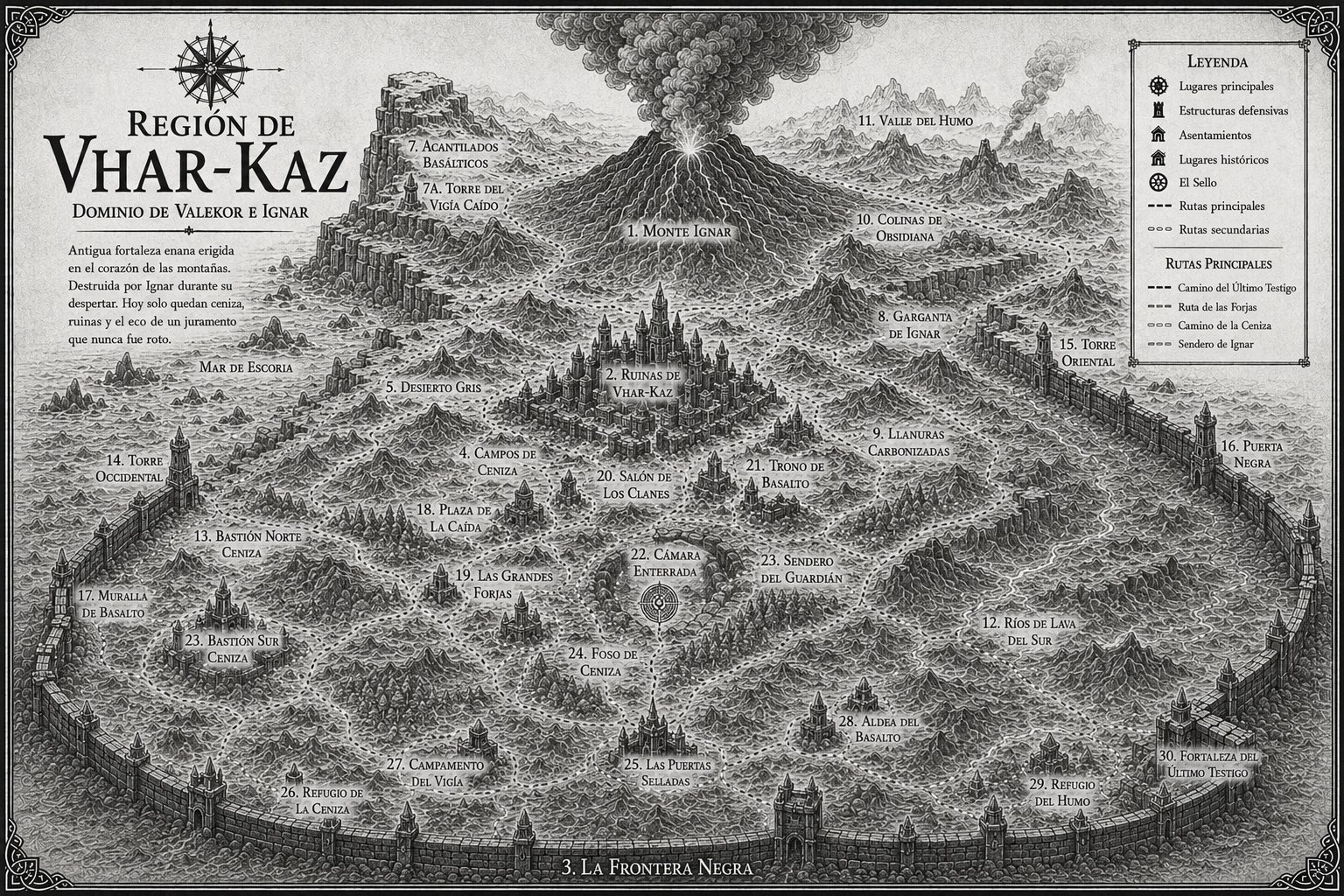
Click to enlarge · Official map of Region 01
Vhar-Kaz existed before there were maps to chart it. The dwarves who dug its first tunnels were not searching for ore — they were searching for warmth, for the presence they had felt beating beneath the rock for generations. An ancient presence. Constant. One that never quite slept.
For centuries the city grew downward. Level after level, following the heat, following the heartbeat, until the excavators of the seventh level found something no historical record describes with any precision. All that is known is that they stopped. That they sealed the passage. That they posted guards. And that the guards never spoke of what they had seen.
What followed was an age of prosperity without equal. The forges of Vhar-Kaz fed the continent with tools and weapons for centuries. The Market of a Thousand Forges became the greatest underground trading hub in the known world. The five clans prospered, quarreled, allied and betrayed one another as their interests dictated — but they always kept the city running.
Then came the tremors. And after the tremors came Ignar. And after Ignar, nothing was ever the same again.
Khaz-Gor is not a built city — it is a carved one. Its streets are tunnels, its plazas are caverns, its windows open onto rock instead of sky. The light comes from the forges, from the bioluminescent fungi cultivated on the middle levels, and from the orange glow rising through the fissures of the seventh level.
There is no wood. Everything is stone, metal and obsidian. The doors stand twice as tall as they need to, because the dwarves who designed them built them with something larger than themselves in mind — though no one remembers what, anymore.
The main entrance. A trading district open to outsiders. Human merchants, explorers and emissaries from other regions. The only level where tongues other than the mountain dwarves' dialect can be spoken without drawing suspicion.
Workshops, lesser smithies and guild shops. The noise never stops. The smell of hot metal never fades. Most of Khaz-Gor's dwarves are born here, and here they learn their craft from childhood.
The economic heart of Vhar-Kaz. A cavern of staggering proportions where everything produced on the lower levels changes hands. Negotiations here can last for days. Contracts are carved in stone, not written on paper.
Where the representatives of the five clans make the decisions that shape the entire region. Sessions are public, but access is controlled. Votes are secret. The results, inevitably, leak before they are announced.
The oldest and mightiest forge in the city, open only to the masters of Clan Forge. It is said to have been lit the day the founders arrived, and that it has never gone out since. Not even during the tremors.
Tombs, memorials and records of the founders and their most illustrious descendants. The dwarves of Vhar-Kaz do not bury their dead in earth — they merge them into the rock. The bodies are coated with a special alloy that fuses them with the stone. They remain, part of the mountain.
Guarded by Clan Threshold. No one outside the clan knows exactly what lies there. Every historical record mentioning the seventh level has been systematically purged from the public archives. What is known: no one goes down without permission. No one goes down alone. And no one speaks of what they have seen.
The society of Vhar-Kaz is organized into five great clans. Each clan controls one sphere of the city's life — economic, military, spiritual or historical. Alliances between clans shift with the interests of the moment, but open hostility is forbidden within the bounds of Khaz-Gor.
The eldest clan. Keepers of the volcano and guardians of the oral tradition. Regarded as near-sacred for their historic closeness to the dragon. They wear fireproof leather robes embroidered in red and black. They speak little and remember everything.
The elite smiths and artisans. They control the Market of a Thousand Forges and hold exclusive access to the Great Forge on the fifth level. They are the wealthiest in the city, and the proudest. Their skill at working volcanic metal has no rival on the continent.
The miners and excavators. They know every tunnel in the mountain better than anyone. They speak little and work always. They have no political ambitions — they only want to keep digging. Some say what they are digging for is not ore.
Descendants of the survivors of ancient eruptions. Considered ill omens by the other clans, yet they are the finest scouts and trackers in the region. They know routes that appear on no official map.
Guardians of the Deep Chambers. The smallest clan, and the most closed. No one knows exactly how many they are. They do not marry outside the clan. They do not speak of their duty. When anyone asks, they change the subject with a skill that is deeply unsettling.
Vhar-Kaz is a city of the deep, and its people are the people of stone and forge. There is no single race here so much as a way of life carved into the rock over centuries — dwarves who dug downward chasing a heartbeat, the clans that grew from their labor, and the outsiders they learned to tolerate at the threshold of their world.
The people who carved Khaz-Gor out of living rock, born to the forge and the tunnel. They followed the heat and the heartbeat downward for generations, level after level, building doors twice as tall as they needed — as if for something larger than themselves that no one now remembers.
The political fabric of Vhar-Kaz. Five houses that prospered, quarreled, allied and betrayed one another as their interests dictated, yet always kept the city running. Their rivalries are old and their contracts are carved in stone, not written on paper — for in the mountain, a bargain is meant to outlast the men who make it.
Human merchants, explorers and emissaries, permitted only at the Gate of the Titan — the one level where a tongue other than the mountain dialect may be spoken without drawing suspicion. Tolerated for their trade, watched for everything else, they never see how deep Khaz-Gor truly goes.
Vhar-Kaz is the continent's largest exporter of worked metal. Its forges produce weapons, tools and structures sold across every known region. The official currency is the Kraz — a coin of volcanic alloy, virtually indestructible and extremely hard to counterfeit, as it requires minerals found only in the deepest levels of the mine.
Runs north to Kaer-Dur. Worked metal is traded for furs and medicinal ice — a compound the dwarves of the north distill from the glacier, prized for its healing properties against forge burns.
Runs east to Khor-Val. Volcanic minerals are exchanged for quarry stone. An ancient, well-established route that has operated since before the five clans were founded.
The western approach across the Sea of Slag permits limited maritime trade. Conditions are extreme — ash in the air, poor visibility, unpredictable thermal currents. Only the most seasoned captains dare the crossing.
A secret route to the south known only to Clan Ash. Its exact destination is not public knowledge. It is known to exist because Clan Ash merchants occasionally appear with goods they could not possibly have obtained along the official routes.
The creatures of Vhar-Kaz have spent generations adapting to the extreme conditions of the volcanic mountain. Most are harmless — or at least manageable. Some are not.
A pack predator. Long, agile body; dark blue scales with glints that shimmer faintly in absolute darkness. No functional eyes — they hunt by vibration and heat. Pronounced dorsal crests, jaws with double fangs, a long muscular tail. Alone, manageable. In groups of three or more, lethal. They have haunted the deep levels for generations, slowly mutated by the energy of the sealed gates. They are smarter than they look — they learn as they fight.
A fist-sized insect with a fireproof carapace. The dwarves use them as living smelting tools — set upon hot metal, their mandibles can etch precision marks no hand tool can match. Clan Forge breeds them in the workshops of the second level.
A reptile that dwells along the edges of the lava rivers. Its skin is black and gleaming as obsidian — hence the name. The dwarves consider it a great omen of fortune: to see one is a sign that the rock is sound and the volcano stable. Eating one is forbidden by ancestral custom.
A creature of the seventh level. No one has ever seen it whole. It is known only by the tunnels it leaves behind — perfectly circular, two to four meters across, their walls melted as though something searingly hot had passed through. Clan Threshold does not answer questions about the Deep Worm.
A bird of vast wingspan that nests on the basalt cliffs outside. It eats volcanic rock — no one knows exactly how it digests such a thing. Their gathering in great numbers is a sign of imminent volcanic activity. The dwarves of Clan Ash watch them as an early warning system.
Technically not a creature, but the dwarves treat it as one. A bioluminescent fungus cultivated on the middle levels that provides most of Khaz-Gor's light. It reacts to heat and sound by shifting in intensity. Some swear it responds to the emotions of those around it.
Small and quick, it squeezes into anything. The miners tame them as gas detectors — if the rat dies, there is toxic gas. If the rat flees for no apparent reason, there is something worse than gas. The miners trust the rats more than their instruments.
A massive colony in the deep levels. Blind, they navigate by electric echolocation. If anything disturbs the level's electric field — such as the opening of a door that has been shut for centuries — they all take flight at once. A ceiling of bats in motion is the only warning sign the guards of the seventh level truly fear.
A gold-shelled insect that lives in the Market of a Thousand Forges. It feeds on the metal scraps littering the floor — filings, shavings, casting fragments. The smiths tolerate them because they keep the floors clear of debris that could cause accidents. Bringing one home brings good luck, according to Clan Forge tradition.
A bioluminescent larva that lives in the rock between the fourth and fifth levels. Its light is faint but constant — a greenish blue. The dwarves keep them in glass jars as emergency lamps. They live for months with no apparent food. No one has ever studied what, exactly, they feed on.
A dark shape that moves through the fissures in the rock. Too large to be a rat, too silent to be anything known. The miners who have seen it cannot agree on a description — some say it has a human shape, others say it has no fixed shape at all. Clan Threshold does not answer questions about it.
Not exactly a creature — a sound. On the seventh level, under certain conditions, an echo repeats what you say with a slight delay. But it does not repeat exactly what you said. It repeats what you were about to say next. The guards of Clan Threshold carry strict orders never to speak on the seventh level.
The dwarves of Vhar-Kaz do not worship gods in the sense other races understand the word. They revere the mountain as a living entity, and Ignar as its guardian spirit — though none of them would ever say so aloud in those terms. They prefer to speak of presences and forces rather than beings with a will of their own.
The Night of the Forges — an annual celebration in which every smith competes to create the finest piece of the year. The winning work is offered symbolically to Ignar, placed upon the Altar of the First Level for seven days. Afterward it is auctioned to the highest bidder. The prices are astronomical.
The Day of the Descent — a commemoration of the day the founders of Khaz-Gor first reached the seventh level. It is marked by a descending procession from the first level down to the sixth — never the seventh. On the sixth level, the elders recite from memory the names of every founder. The rite lasts for hours.
The Ashes of Remembrance — a day of mourning for the eruptions of the past and those who died in them. No one works. No forge is lit. No one speaks more than is necessary. It is the only day of the year when the city falls completely silent.
The diet of the Vhar-Kaz dwarves is more varied than outsiders expect. Fungi cultivated on the middle levels form its foundation — there are dozens of varieties, some medicinal, others purely culinary. Meat comes from the beasts of the mines and the animals of the outer cliffs. And Black Fire — a liquor distilled from volcanic fungi — is the region's most famous drink. It is said to warm you from within through even the harshest winter. It is also said that, taken in excess, it brings visions. No dwarf of Vhar-Kaz would ever confirm this.
The dwarves of Vhar-Kaz do not bury their dead in earth — they merge them into the rock. The bodies are coated with a special alloy that fuses them with the stone of the mountain. The belief is that the dead do not vanish: they become part of the mountain and keep watch from within. The Halls of the Ancestors on the sixth level hold centuries of history preserved this way. To touch the walls is to touch the dead. To do so without the leave of the rightful clan is the gravest insult there is.
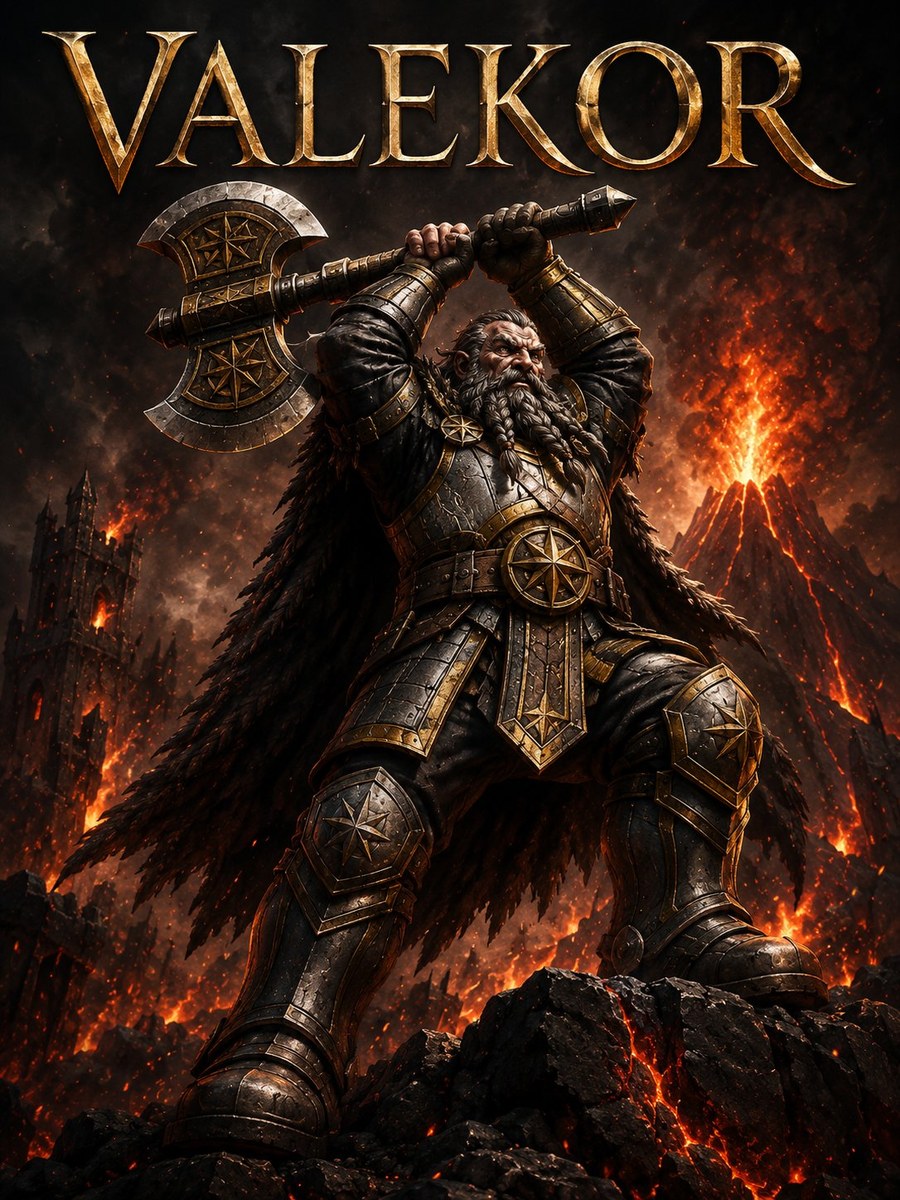
The Guardian of the Ashes. For thirty years he has sought answers about the fall of Vhar-Kaz. Short. Broad-shouldered. He moves with the quality of someone who has turned movement into something beyond technique.
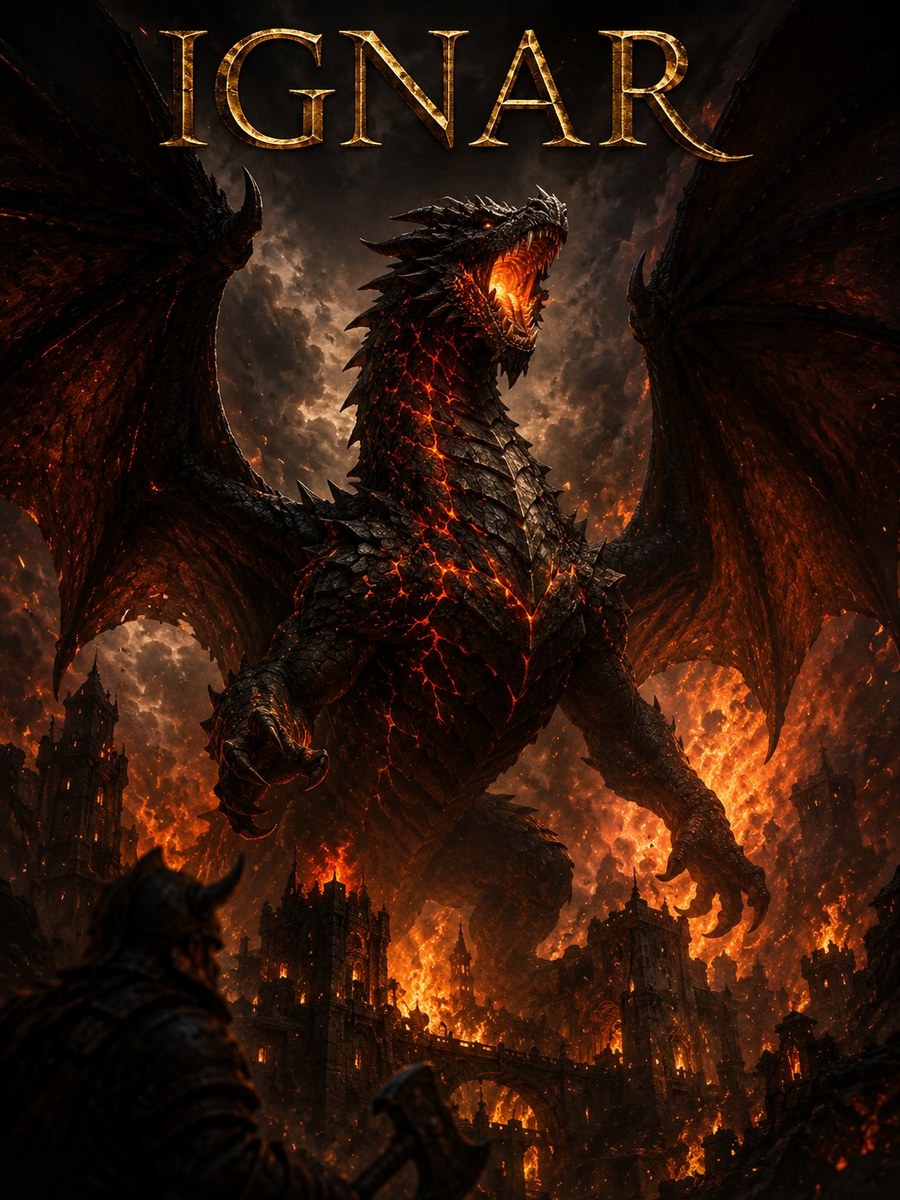
The ancestral dragon of Vhar-Kaz. Not a monster — a character. For centuries he has guarded the five gates of the seventh level. He knows the mountain better than anyone. He speaks little. He watches much.
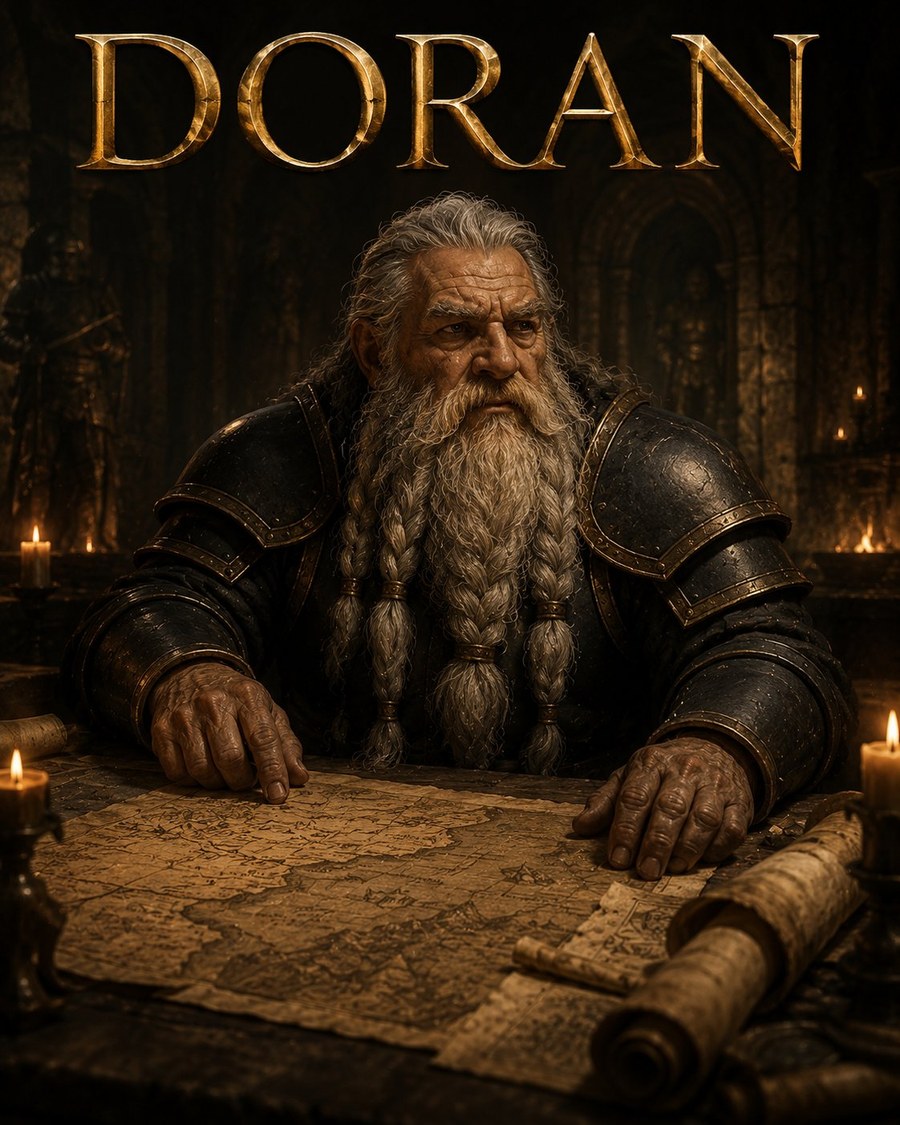
He knows the ruins of Vhar-Kaz like no one else. It was he who led the group to the northern entrance of the mines. A good Named follows his quarry unseen — and Doran has spent years following something no one else can see.
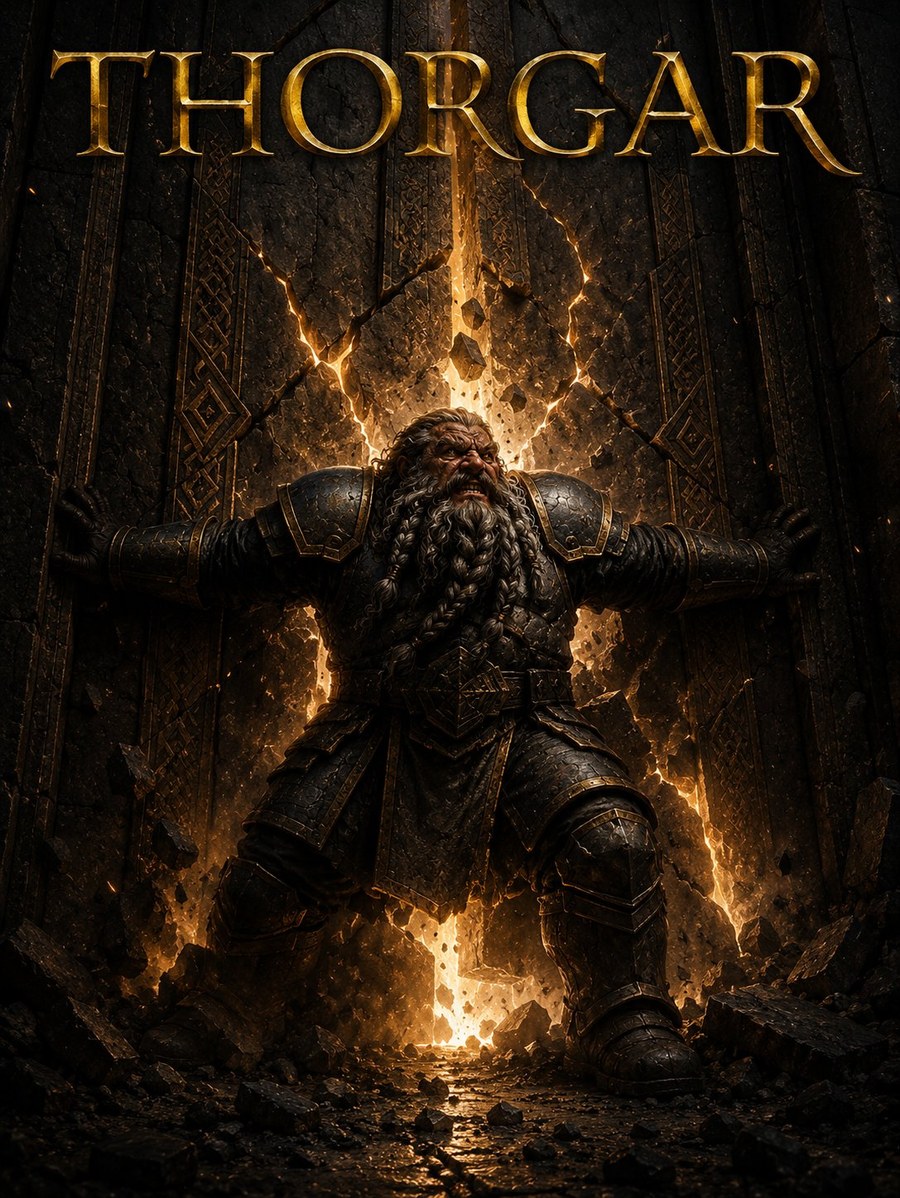
Some doors are not shut with keys. Thorgar knows this better than anyone. A veteran warrior of Clan Forge, his presence in any narrow corridor is a guarantee that no one passes without his leave.
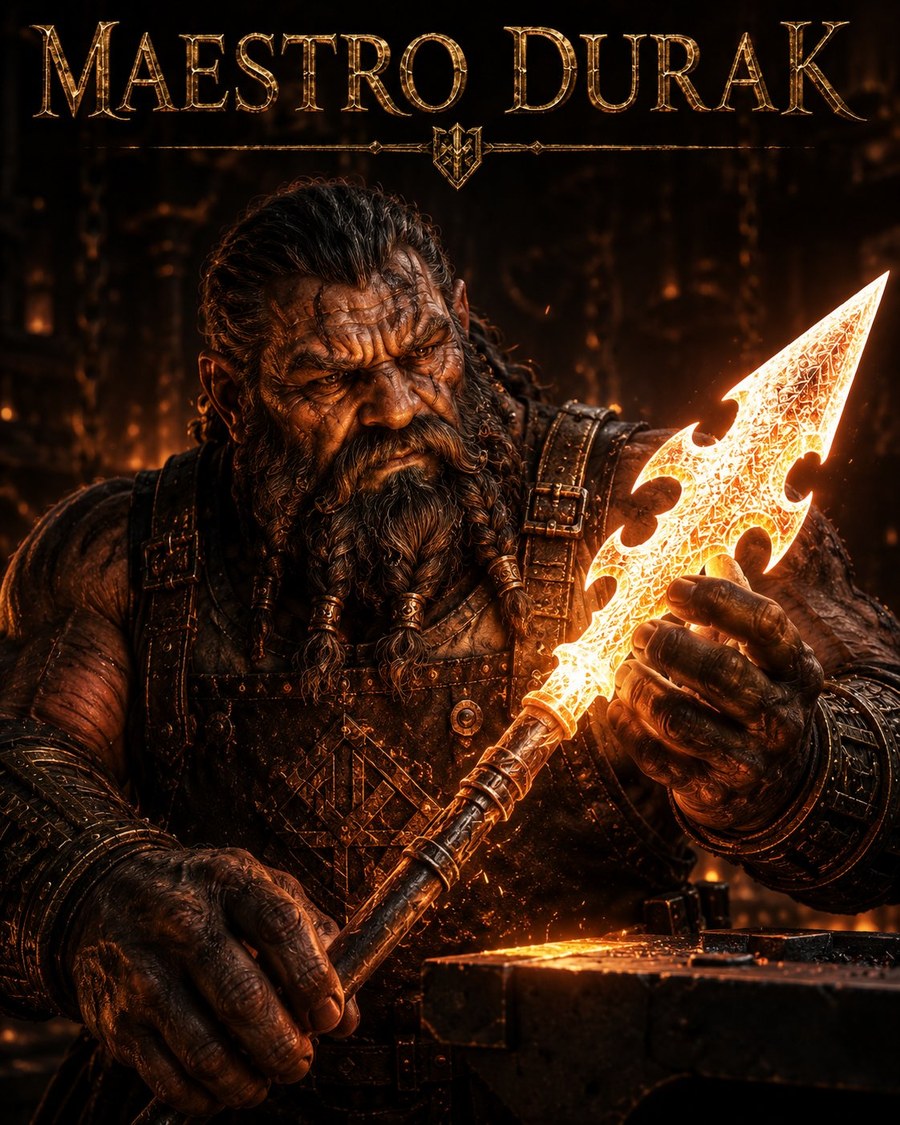
Metal does not lie. Metal is what it is. Master smith of Clan Forge, he knew Valekor's axe when it was still a block of volcanic ore. He forged it himself. He knows what it means.
The FDM figures of Ignar and Valekor are available in our shop. Each one comes with its story, its map and its Codex.