
ACOTAR 6 has an official publication date; that does not establish a screen premiere. For fantasy readers following adaptation news, the useful next question is what a screen version should preserve beyond familiar faces and scenery.
The short answer: separate the publishing announcement from the adaptation, then look for the decisions, relationships and discoveries that make the story matter. DRAKHTHAR provides a practical exercise in identifying those priorities across prose, world information and physical designs.
What does the official ACOTAR announcement confirm?
Sarah J. Maas’s official FAQ lists 27 October 2026 for ACOTAR 6 and 12 January 2027 for ACOTAR 7. Bloomsbury’s announcement confirms those publication dates.
Those are book announcements. Neither page establishes a television premiere or a confirmed cast. The sources verified here therefore support the publishing calendar, without settling the current production status of an adaptation.
That distinction leaves room for a more interesting discussion than guessing who might play whom. When you imagine a favourite passage on screen, what exactly are you hoping to recognise: an appearance, a feeling, a choice, or the moment when your understanding changes?
Would a recognisable world be enough?
Imagine an adaptation that reproduces every location you pictured but changes why someone makes a crucial decision. Would it still feel faithful? Now reverse the exercise: the architecture looks different, yet the decision and its consequences remain convincing.
There is no compulsory answer. The comparison helps you name your priorities instead of using “faithful” to mean everything at once.
On the DRAKHTHAR website, readers encounter a novel preview alongside a world presented through thirteen regions, dragons and the Named. These materials make it possible to consider narrative and setting separately.
For this exercise, treat adaptation as a hypothetical creative problem. Choose something you can read or inspect and ask what would be lost if only its appearance survived.
What would you put in an adaptation brief?
Here is our proposed worksheet for exploring DRAKHTHAR. It is a reading exercise, not an announcement of a screen project.
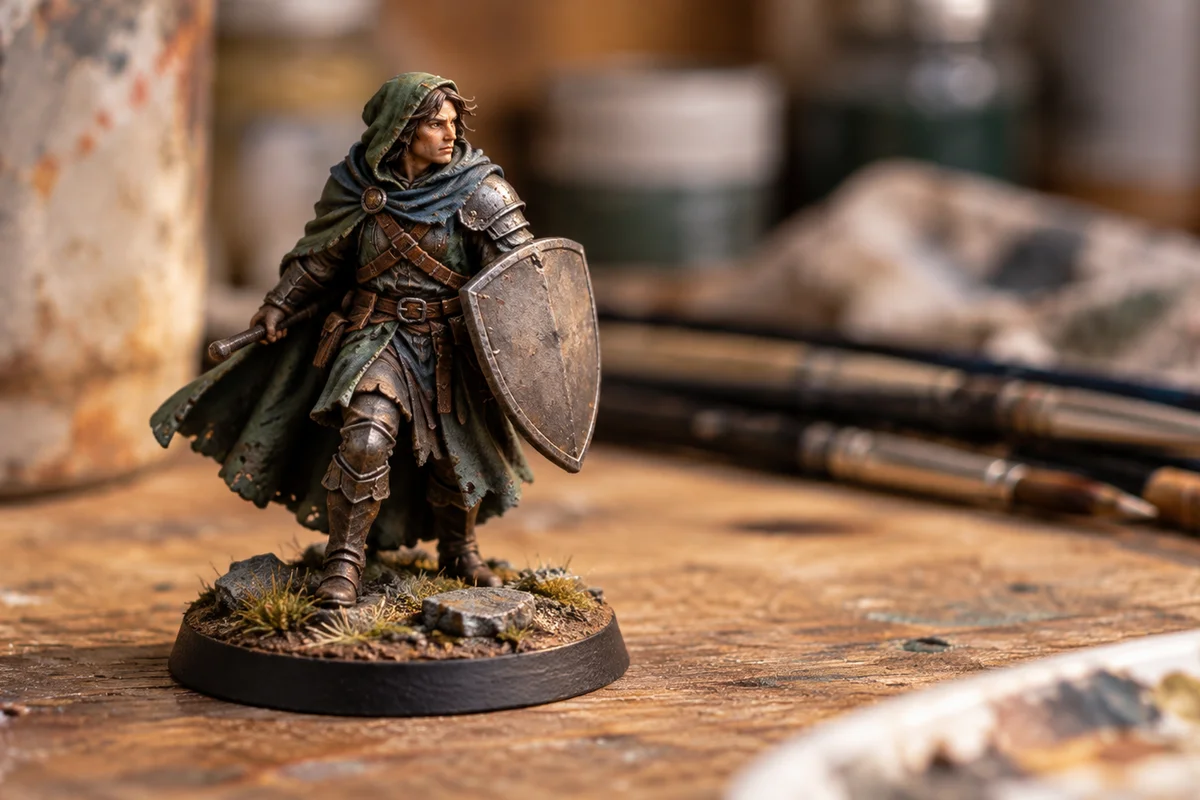
| Material on our site | Question to investigate | Note for an imagined adaptation | |---|---|---| | Novel preview | What does the passage let you discover gradually? | Identify information that should remain unrevealed initially | | Presentation of the regions | Which distinction helps you understand the setting? | Explain how a viewer could notice it | | Dragon and Named presentation | What is stated, and what are you merely imagining? | Keep documented identity separate from interpretation | | Miniature imagery | Which visible feature draws your attention? | Explain whether it matters to your reading |

The most useful entry is a reason. “Keep this because it changes how I understand the scene” gives you something to discuss. “Keep everything” leaves every difficult choice unresolved.
You can also leave a row blank. A striking image need not answer a question about motivation.
How can you test your priorities without inventing lore?
Use the book section of the English home page to access the preview. Select a short passage and record what you know at its beginning and what you know at its end.
Then imagine showing that change without an explanatory paragraph. Would dialogue, an action or a reaction communicate it? If your solution requires inventing an event, mark it as your proposed change rather than attributing it to DRAKHTHAR.
Readers exploring the Spanish presentation can use the same questions; its book section identifies the preview as English-language material.
Finish with a single sentence: “This passage needs to preserve ___ because ___.” You now have a concrete standard for discussing fantasy on screen—one grounded in reading, ready to use when an actual adaptation offers something to evaluate.