
An unseen threat becomes interesting when you can explain what you fear might happen. Darkness alone gives you little to anticipate; a suggestive name or an unanswered question gives your imagination somewhere to go.
The short answer: distinguish what a fantasy presentation reveals from the danger you supply yourself. DRAKHTHAR’s forthcoming-character descriptions offer a compact case study for readers who enjoy unsettling fantasy in books, films and television.
Can a name suggest danger before anything happens?
Try a thought experiment. Imagine a doorway in an otherwise empty scene. Then imagine hearing footsteps behind it. Finally, imagine being told that the footsteps have stopped whenever you stop moving.
These are hypothetical variations, but notice how your question changes. You move from wondering what lies beyond the door to wondering whether something is listening.
For this reading of dark fantasy, that shift matters more than adding another ominous visual detail. You have begun to imagine a relationship between yourself and an unknown presence.
A name can invite a similar response. Words associated with watching, hunting or guarding suggest possible actions. They do not establish who performs those actions, whom they affect or why.
What do DRAKHTHAR’s descriptions actually reveal?
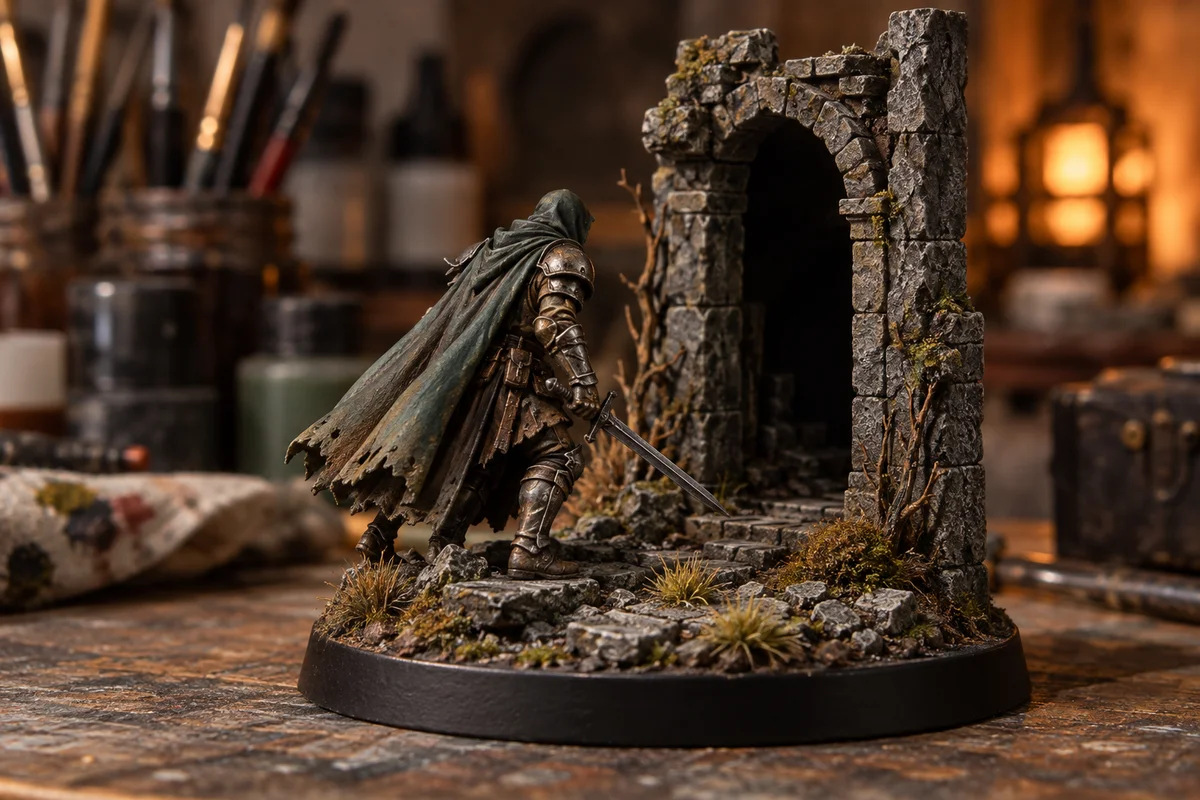
The forthcoming section on the official Spanish DRAKHTHAR page presents Frost as an ancient guardian associated with Kaer-Dur, Sergail as a shadow hunter whose region is unknown, and Acechador Nocturno as a creature of darkness from a hidden region.
Those brief descriptions provide the factual starting points below. The questions are our interpretation, not additional lore.
| Published starting point | Question it invites | What remains unestablished | |---|---|---| | Frost: guardian | Would encountering a guardian feel reassuring or dangerous? | Whether a particular visitor would be welcomed | | Sergail: hunter | Does the word make you imagine pursuit? | The target or circumstances of any hunt | | Acechador Nocturno: darkness | What do you expect to remain unseen? | Its behaviour in a specific encounter |
The useful comparison concerns your expectations. Which description makes you imagine an immediate danger? Which makes you want an explanation first?
Neither response requires deciding that a character is evil.
Is missing information always suspenseful?
Consider two versions of an imaginary encounter. In one, you know nothing about a creature or the person approaching it. In the other, you know that the approaching person needs to pass, but you cannot tell whether the creature will allow it.
Which version gives you more to worry about?
For our purposes, the second offers a clearer question. You can anticipate an outcome without knowing the answer. The first may still appeal through atmosphere, but uncertainty alone does not tell you what matters.

Apply that distinction to a short character introduction. An unknown location can encourage curiosity without establishing danger. A threatening title can suggest danger without explaining its consequences. Keep those responses separate when describing why something interests you.
How would you recognise this in film or television?
After an unsettling scene, ask what you were waiting to see happen. Perhaps you expected someone to turn around, open a door or notice a presence. Then identify what created that expectation.
You can also ask whether the scene resolved the question or merely delayed it. Neither choice is automatically better: judge the experience you actually had.
When reading prose, try the same exercise with information rather than camera position. What did the passage let you know? What did it leave you anticipating? This offers a way to discuss tension across media without reducing it to how dark an image looks.
Where can you try the comparison?
Start with DRAKHTHAR’s forthcoming descriptions and choose the one that most unsettles you. Complete this sentence: “I expect danger because ___.” Underline anything you have imagined rather than read.
Then visit the book section of the English DRAKHTHAR home page for its preview access. Approach a passage with a specific question: does the writing give your expectation a reason to grow, change or disappear?
Your next step is to identify one moment of anticipation and explain what produced it. That is a more precise way to discuss dark fantasy than simply calling a world sinister.