
To paint a PLA miniature, remove support remnants, clean and selectively sand the surface, apply a compatible primer, build up thin acrylic colours, then shade with a controlled wash. Let each stage dry before continuing. The preparation and painting guides linked below explain the process.
Aim for a readable, attractive figure, not a promise of a resin-like finish. Our recommendation for a first FDM miniature is to preserve its sculpted details even if some printed texture remains.
How to paint 3D printed figures for beginners: choose your goal
Before buying colours, examine the unpainted model. Which areas matter most to you: the face, a shield, the folds of a cloak? Make those your priorities.
Gather a small file, sandpaper, suitable primer, miniature acrylics, brushes, a palette, water and a wash. FLUX confirms that acrylic paints can be used on PLA, while warning that not every paint is suitable. Check the particular products you intend to combine. FLUX’s PLA finishing guidance.
For practice, we suggest a figure you feel comfortable experimenting on. Save an irreplaceable favourite until you have tried the workflow.
Preparing PLA: clean first, sand selectively
Remove remaining supports and burrs, clean the surface, and clear away sanding dust before coating. Test an unfamiliar cleaner on a hidden area; PMcolours stresses compatibility with the plastic. Manufacturer’s preparation guide.
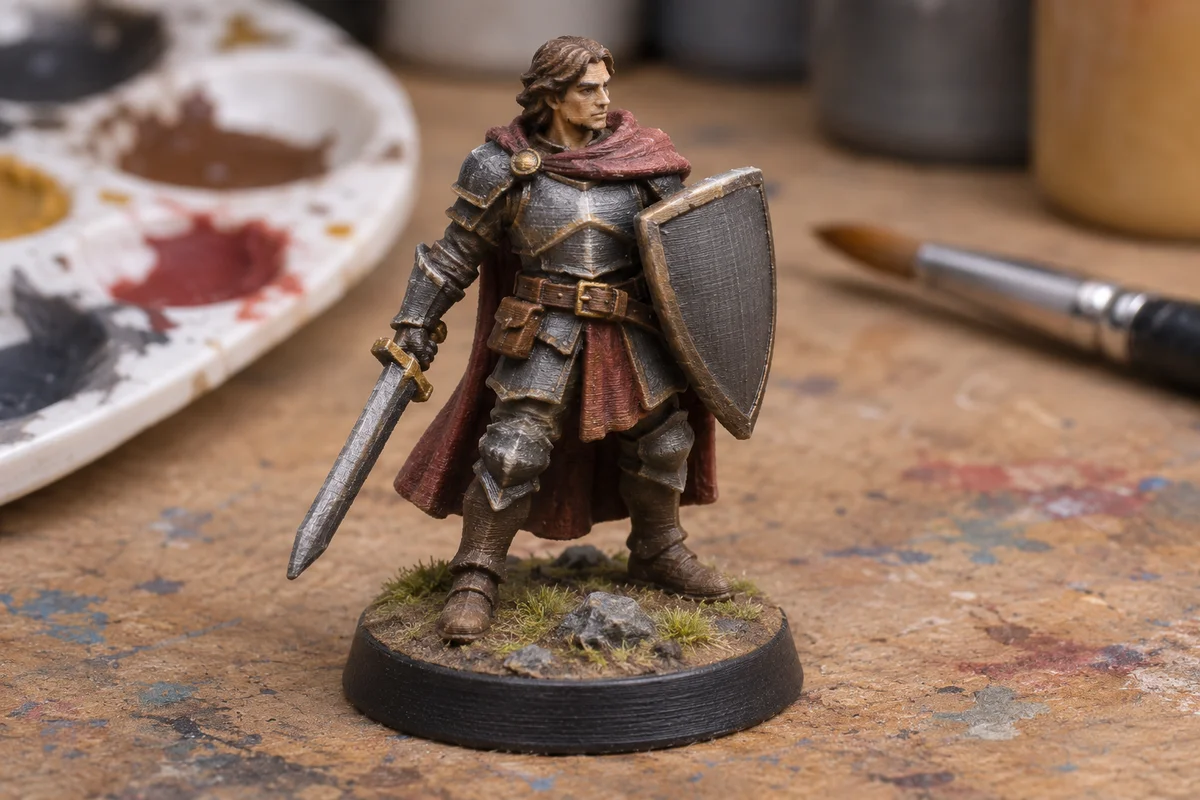
Use a file for accessible irregularities and sandpaper on broader areas. FLUX describes these tools as a way to reduce visible layers. Work selectively: our suggested stopping point is when further smoothing would put a detail you want to keep at risk. Sanding PLA.
Do not automatically cover the whole figure with filler primer. PMcolours warns that filler can obscure fine relief. Adhesion and smoothness are different goals; a coating can stick well while the printed layers remain visible. Detail versus surface smoothing.
Priming: give the colour a foundation
For this beginner workflow, use a primer intended for the material and paint system. Priming helps subsequent paint adhere, as explained in The Army Painter’s introduction.
Follow the selected product’s application, ventilation and drying instructions. Do not borrow a spraying distance or waiting time from an unrelated product.
Grey is a useful neutral starting point; a primer close to the dominant colour is another option. These are choices described in The Army Painter’s primer guide. For a first attempt, choose one approach and keep it simple.
How to paint 3D printed miniatures with acrylics
Shake the paint, put a little on your palette and adjust its consistency for thin, even application. Begin with awkward-to-reach areas, avoid overloading the brush, and build coverage gradually. Let the basecoat dry before detailing. Official basecoating tutorial.
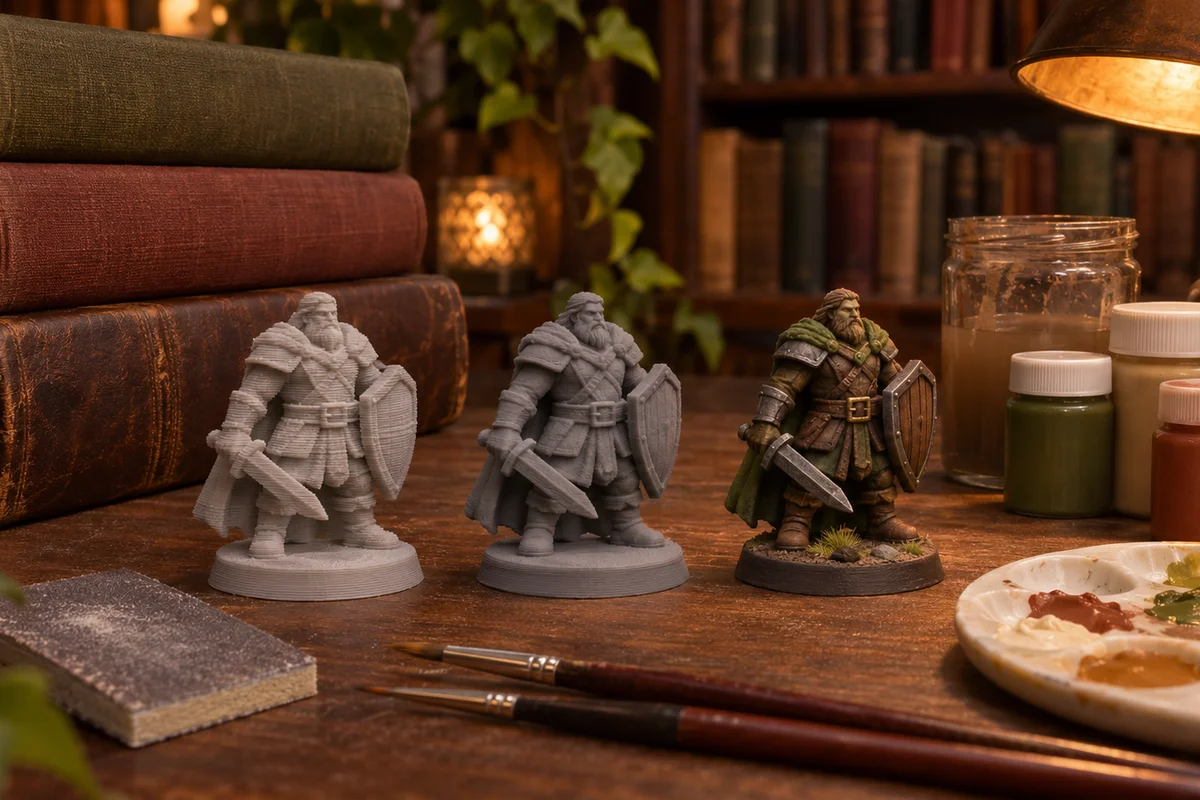
We suggest planning a restrained scheme before starting: perhaps a dark cloak, lighter equipment and a contrasting focal point. These are painting choices, not rules about any fantasy setting.
Judge progress by whether neighbouring areas are clearly separated. You do not need to attempt every technique on your first miniature.
Washes and drying: control the shadows
A wash flows into recesses to create shade. Apply it over dry paint, working section by section. Lift excess pooling with a clean, slightly damp brush, then let the wash dry completely before adding more paint. The Army Painter’s wash instructions.
Our FDM-specific recommendation is to test a discreet section first. Decide whether you like the texture it reveals before washing the entire figure.
Miniature painting tips for beginners: know when to stop
Avoid treating thick paint as filler, adding wash everywhere without inspection, or rushing onward while a layer is still drying. Return to the relevant preparation or painting step instead.
This workflow also makes a sensible starting point for the collectible FDM miniatures presented by DRAKHTHAR. Choose your own palette without assuming it represents an official character colour scheme.
Finish when the figure meets your chosen goal. A clearly painted miniature with some visible FDM texture is a worthwhile first result.