
For a Huge dragon, plan a 3 × 3-square footprint; for a Gargantuan dragon, plan 4 × 4 squares or more. Those measurements follow the fifth-edition rules for spaces of 15 × 15 feet and 20 × 20 feet or larger, with each grid square representing 5 feet. They describe combat space, not the sculpt’s height or wingspan. Official combat rules.
Our buying recommendation is simple: choose the creature’s stat block first, establish its footprint, then compare physical models. This guide uses SRD 5.1 and the 2014 Basic Rules as its rules reference.
Dragon miniatures for D&D 5e: start with age and size
A dragon’s name alone is insufficient. The SRD’s red dragon entries, for example, progress from Medium wyrmling to Large young dragon, Huge adult and Gargantuan ancient dragon. Check the actual entry you intend to run rather than assigning a category from the miniature’s appearance. SRD 5.1, red dragon entries, pages 286–288.
| Red dragon entry | Size category | Combat space |
|---|---|---|
| Wyrmling | Medium | 5 × 5 feet |
| Young | Large | 10 × 10 feet |
| Adult | Huge | 15 × 15 feet |
| Ancient | Gargantuan | 20 × 20 feet or larger |
The categories come from those dragon entries; the space measurements follow the official monster size table. Treat this as a worked example, not a replacement for checking other dragons, special variants or another rules version.
Huge and Gargantuan bases: read the product description
A physical base measurement does not necessarily identify the creature’s rules category.
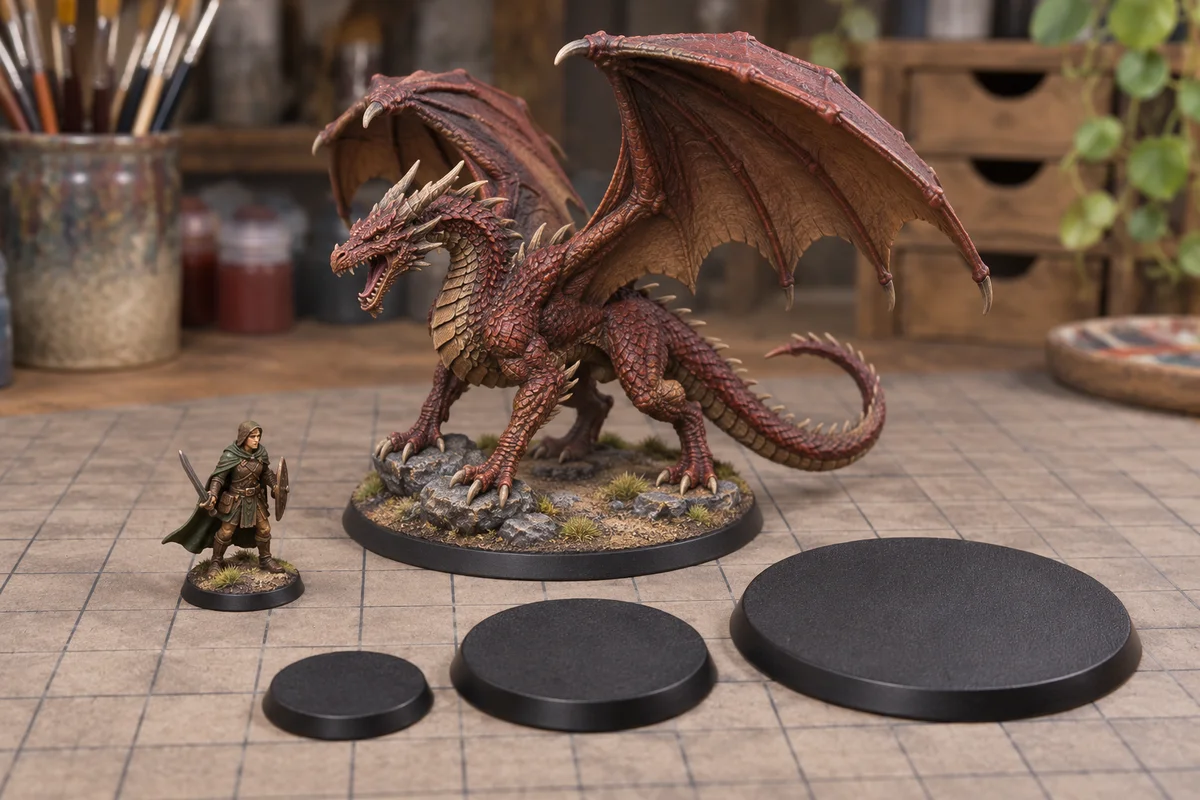
WizKids lists its Red Ghost Dragon as Huge, on a 100 mm base with a 75 mm threat ring. Its Nolzur’s Ancient Blue Dragon is described as Gargantuan, also on a 100 mm base. These are documented product specifications, not universal base requirements. Red Ghost Dragon, Ancient Blue Dragon.
That comparison is more useful than memorising “100 mm means Gargantuan.” Read whether the listing distinguishes the supporting base from a marked playing area. Ask how the miniature is intended to sit on your grid.
For a crowded encounter, we suggest making a paper footprint before purchasing. Place your adventurers around it and test whether the intended sculpt would leave their positions visible.
28mm fantasy miniatures: which scale should you buy?
Do not turn “28mm” in a search result into a required dragon height. The cited combat rules establish controlled space; they do not prescribe a universal miniature scale or sculpt height. Size and space explained.
Our recommendation is to compare the model with your existing figures and terrain. Request a photograph beside a familiar adventurer miniature, plus separate measurements for the base, assembled height and maximum width.
If a listing supplies only “28mm scale,” the dimensions needed for that purchase decision are still unconfirmed. Avoid estimating them from a dramatic product image.
For regular tactical play, favour a pose that lets you see and reach neighbouring pieces. For painting and display, you may prefer a more expansive silhouette. Decide which use matters most before choosing.
D&D dragon miniatures 3D print: specify the finished result
When ordering a print, give the maker the intended rules category and your measured grid spacing. Ask for the finished dimensions of both the dragon and its base.
Our suggested order checklist is:
- Is the quoted item a physical print or a downloadable file?
- What dimensions will the assembled miniature have?
- Is the base included, and is it separate?
- Can the maker show a real print at the requested size?
- What assembly remains for the buyer?
Do not approve a purchase solely because its preview looks impressive. If the dimensions are missing, request them before committing.
Choosing a dragon mini for D&D: when to pass
For a recurring tabletop opponent, we would prioritise a readable footprint, accessible surrounding squares and manageable storage. For a display project, judge the pose and available shelf space instead.
Pass on a model when its dimensions remain unclear or when accommodating it would undermine the way your group uses the map. If you already own an oversized favourite, agree with the group on a clearly marked footprint and use the sculpture as its visual companion.
The best purchase is the dragon you can enjoy painting, moving and storing—with its place on the battlefield understood before the encounter begins.